
The Science Behind SMAX Modules
Our modules are built on advanced N-type silicon cell platforms — TOPCon and HJT — delivering higher efficiency, lower degradation, and stronger real-world performance than conventional P-type technology.
Why N-Type Silicon?
N-type silicon wafers are doped with phosphorus instead of boron, which fundamentally changes how the cell handles light and heat. N-type cells are immune to Light Induced Degradation (LID) — a common issue in P-type cells that causes 2–3% power loss in the first year.
The result is higher initial output, slower degradation over time, and better temperature behaviour. This translates directly into more energy harvested per module over a 30-year lifetime, and a lower levelised cost of energy for your project.
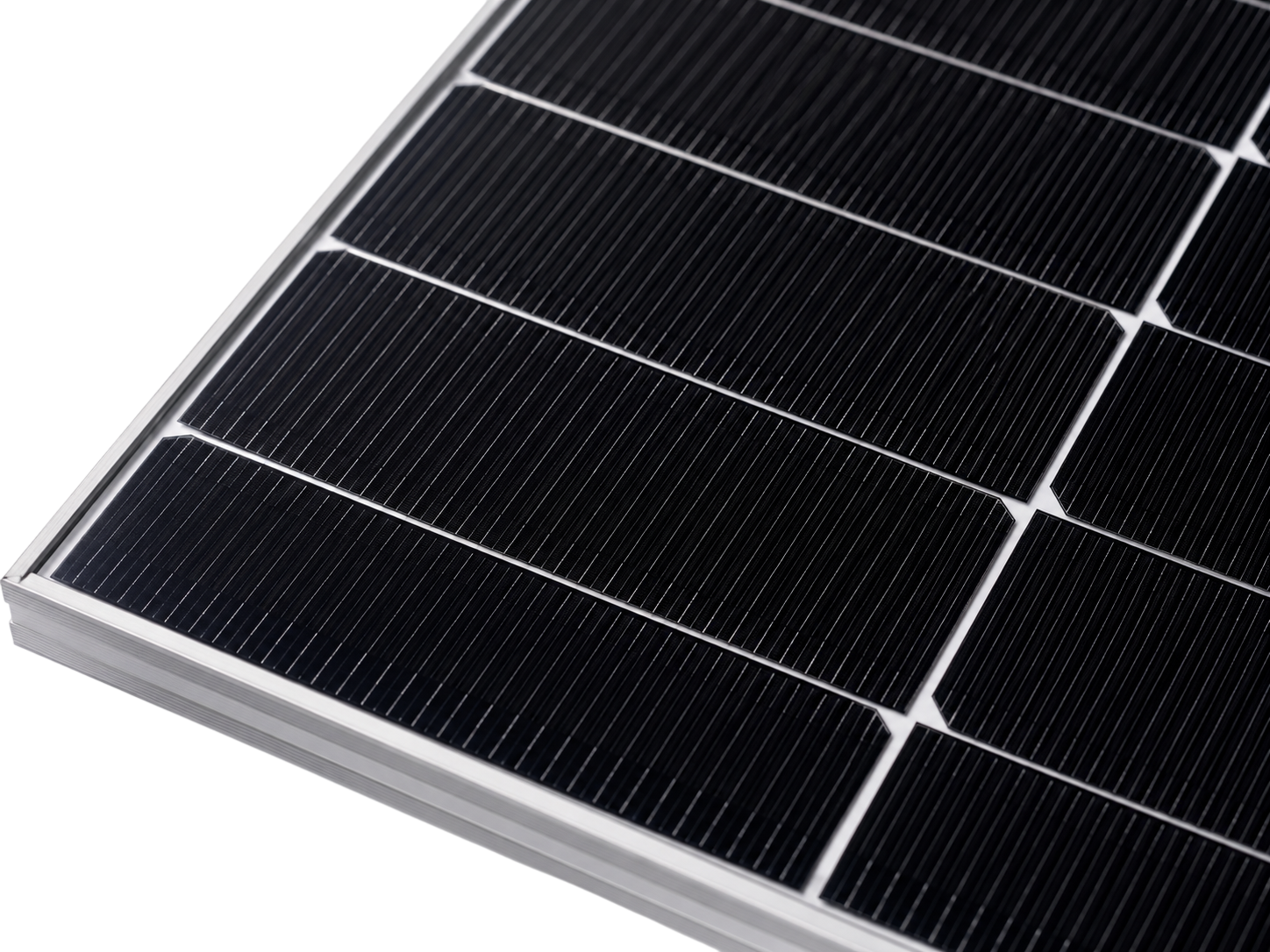
Every SMAX module uses N-type monocrystalline cells. We offer two distinct cell architectures — TOPCon and HJT — each optimised for different performance and cost requirements.
Our Cell Technologies
Two platforms, one commitment to performance.
TOPCon Technology
Tunnel Oxide Passivated Contact (TOPCon) cells use an ultra-thin tunnel oxide layer and a doped polysilicon contact to minimise recombination losses. This delivers high conversion efficiency with excellent low-light response and controlled long-term degradation.
Available Models
HJT Technology
Heterojunction (HJT) cells combine crystalline silicon with thin amorphous silicon layers, creating a cell structure with exceptionally low recombination and superior temperature behaviour. This enables our highest-efficiency, highest-wattage modules.
Available Models
N-Type Advantages Over P-Type
Why the industry is transitioning to N-type cell technology.
Higher Efficiency
N-type cells achieve higher conversion rates due to lower recombination losses, translating to more watts per square metre of module area.
No LID Degradation
N-type silicon is immune to Light Induced Degradation, avoiding the 2–3% first-year power loss common in P-type panels.
Better Temperature Performance
Lower temperature coefficients mean less power loss in hot climates. N-type modules maintain stronger output when cell temperatures rise.
Lower Degradation Rate
Annual degradation as low as 0.35% means your system produces more energy in year 25 and 30 compared to conventional P-type panels.
Strong Low-Light Performance
N-type cells respond better to diffuse light conditions — cloudy skies, dawn, dusk — harvesting more energy across the full day.
Bifacial Compatibility
N-type cells naturally support high bifaciality (80±5%), making them ideal for dual-glass bifacial modules that capture rear-side irradiance.
See Our Technology in Action
Explore our full product range built on TOPCon and HJT cell platforms.